


 Qatar Shopping Festival
Introduction
Long before the modern skyline rose from the desert sands, merchants drove the local economy through maritime trade. Pinpointing the Best Souqs and Traditional Markets to Visit in Qatar offers travelers a direct connection to these ancestral roots. This commercial inheritance survives in the dense, winding corridors of historical trading hubs.
Exploring the Best Souqs and Traditional Markets to Visit in Qatar reveals how local families have welcomed outsiders for generations. These spaces act as living archives where old habits adapt to modern rhythms. Patrons can browse handcrafted fabrics, pungent seasonings, and fine silver ornaments.
This guide highlights the most significant commercial squares across the peninsula. Each marketplace provides a distinct window into regional customs and daily routines. Adjusting travel schedules to explore these sites rewards visitors with a sensory look into local history.
Historical Context of Qatari Bazaars
Historically, localized commercial hubs known as souqs served as the financial core of domestic settlements. Desert nomads and sea divers met at these coastal intersections to swap animal fleece, natural pearls, and camels. The native architecture incorporated raw clay, mud mixtures, and imported mangrove beams to insulate interiors against the harsh sun.
Focused restoration initiatives have successfully revived many of these structures using historical building techniques. Today, these lanes link the historic Bedouin lifestyle with the rapid pace of modern cities. Visitors are greeted by the rich aroma of slow-burning agarwood and the rhythms of folk instruments.
Stepping inside these dense quarters feels like crossing into an older era. Thick earth walls naturally lower temperatures during the intense summer heat. Walking these corridors helps visitors grasp how quickly the nation has evolved.
A Guide to the Best Souqs and Traditional Markets to Visit in Qatar
Choosing where to go becomes simpler when reviewing the main commercial districts. This breakdown introduces the Best Souqs and Traditional Markets to Visit in Qatar, noting where to find them and what they do best.
| Market Name | Location | Main Specialties |
|---|---|---|
| Souq Waqif | Central Doha | Spices, apparel, falcons, local art, and regional dining |
| Souq Al Wakra | Al Wakra (20 km south of Doha) | Coastal dining, handmade crafts, relaxed historic setting |
| Gold Souq | Doha (near Souq Waqif) | 18k, 21k, and 22k gold ornaments, bespoke jewelry pieces |
| Omani Souq | Al Sailiya Central Market, Doha | Aromatic resins, earthenware pots, garden flora, and woven baskets |
Souq Waqif: The Cultural Heart of Doha
In any discussion of the Best Souqs and Traditional Markets to Visit in Qatar, Souq Waqif claims the central spot. Positioned in downtown Doha, this ancient trading post sits where Bedouins once gathered to trade goods on weekends. A comprehensive rebuilding effort in 2006 salvaged the site, using authentic materials to reconstruct collapsed structures.
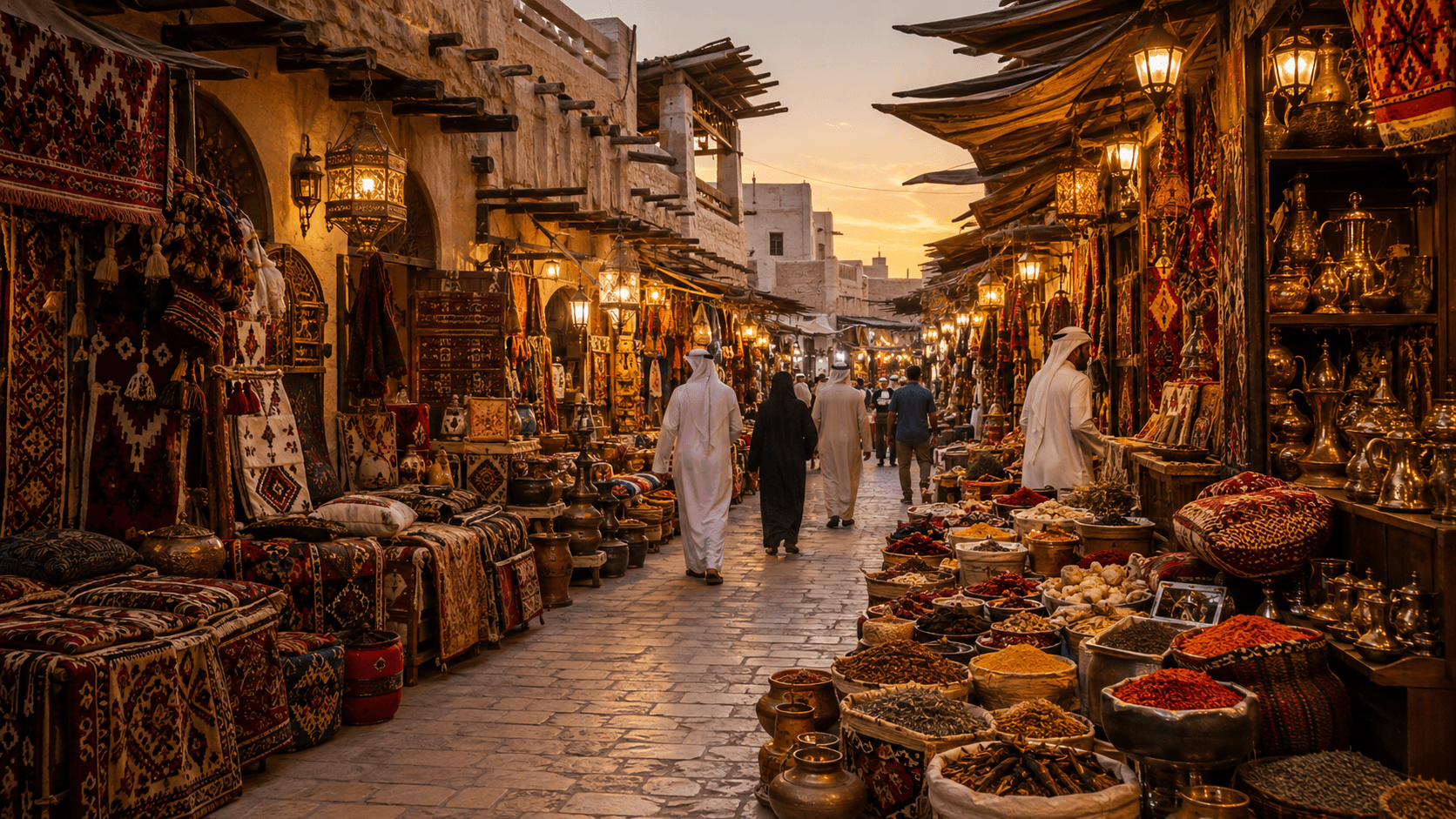
Travelers can easily get lost in dense lanes packed with bright fabrics, foreign spices, and woodwork. The central pedestrian street boasts open-air cafes serving spiced Arabic coffee alongside plates of savory rice dishes. Evening hours offer the best atmosphere, as crowds gather when the sun dips below the horizon.
Creative galleries and impromptu musical showcases dot the surrounding alleys. The location operates as a shared living room for long-term residents and international guests. Merchants generally open from 10:00 AM until noon, then close before reopening from 4:00 PM to 10:00 PM.
Cultural Highlights at Souq Waqif
Getting the most out of this market means looking beyond the main streets. Several dedicated zones highlight unique regional customs and practices.
- The Falcon Hospital: A specialized clinic offering advanced medical care exclusively for highly valued hunting raptors.
- The Heritage Patrol: Mounted officers roaming the stone pathways wearing historical law enforcement uniforms from the 1940s.
- The Spice Quarter: Narrow pathways lined with open sacks of ground cardamom, precious saffron, red sumac, and dried black limes.
Souq Al Wakra: A Coastal Trading Destination
Heading slightly outside the capital brings travelers to Souq Al Wakra, a notable inclusion among the Best Souqs and Traditional Markets to Visit in Qatar. Found about twenty kilometers down the southern coast, this destination provides a marine alternative to inland shopping. It borders a sandy shoreline, with low-rise mud buildings built to resemble historical pearl-diving settlements.
Sea breezes keep the waterfront walkways comfortable during late-day walks. Patrons can dine on fresh catches at seaside eateries or browse stall displays of regional woodwork. The entire layout honors the maritime past of the peninsula, keeping memories of diving and fishing alive.
A restored stone mosque sits at the center of the neighborhood. The area offers a far slower, more peaceful environment than downtown Doha. Families often visit this coastal stretch to escape the noise of the city.
Specialized Markets: Falcon Souq and Gold Souq
The falcon market stands out as a unique highlight within the Best Souqs and Traditional Markets to Visit in Qatar. Positioned right next to the main bazaar, this specialized wing lets outsiders observe these highly trained birds of prey up close. Bird ownership represents an ancient heritage, and training birds remains a respected local sport.
Friendly shop owners gladly explain how they train the raptors and why they use specific leather hoods. Prices for these birds vary wildly, starting at moderate sums and reaching tens of thousands of dollars for prized lineages. The building features a dedicated indoor arena where competitive bidding happens.
Crossing the nearby street brings visitors to the Gold Souq, another distinct location in the collection of the Best Souqs and Traditional Markets to Visit in Qatar. This indoor hall holds dozens of shops glowing with high-purity gold, particularly 18k, 21k, and 22k varieties. Buyers can find heavy bridal sets or request personalized necklaces crafted in hours.
Authorities monitor every single transaction to guarantee weight and purity standards. Shoppers can negotiate the crafting fees, though the metal price itself follows global daily rates. The sheer scale of the glowing windows makes walking through the hall a memorable visit.
The Rustic Charm of the Omani Souq
The Omani Souq offers a simpler, more utilitarian alternative to the polished downtown markets. Situated at the Al Sailiya Central Market, this space serves local residents rather than tourists. It earned its title from regional merchants who traditionally arrived here to sell their household goods.
Visitors can source functional items like terracotta pots, sturdy baskets, and garden shrubs. It is also the go-to spot for purchasing raw frankincense resin and traditional burners. The unpretentious setting offers a direct look at everyday local trade.
Homeowners and green thumbs frequent these stalls for gardening supplies. Rates remain significantly lower here than in the heavily restored tourist areas. It serves as a quiet resource for everyday goods.
Practical Tips for Navigating Qatari Markets
Navigating these busy alleys goes smoothly with a small amount of preparation. Respecting local norms and matching the local schedule makes for an easy visit.
- Attire: Guests should wear modest clothing that covers shoulders and knees to show respect for local standards.
- Currency: Though card readers are common, small spice stalls and individual craftsmen prefer payment in local cash.
- Schedules: Head out in the late afternoon or evening because most vendors close their doors during the midday heat.
Friendly negotiation is part of the buying process for fabrics and gifts. Using a few basic approaches helps secure a reasonable price.
- Stay Friendly: Start negotiations with a polite greeting and a pleasant demeanor.
- Compare Rates: Browse several stalls to get a sense of standard pricing before making an offer.
- Be Ready to Leave: Moving on to another stall politely often causes the merchant to drop the price.
Conclusion
Dedicating time to explore the Best Souqs and Traditional Markets to Visit in Qatar gives a clear view of how locals live and interact. From the ancient pathways of Doha to the seaside boardwalks of Al Wakra, every site has its own story. These places protect ancestral trading traditions in a rapidly evolving country.
Visitors will find these markets memorable whether they are looking for custom gold or sitting with a hot cup of spiced tea. Timing a trip between October and April makes walking the outdoor areas comfortable. The sensory details of these spaces bring history to life.


Comments are closed